
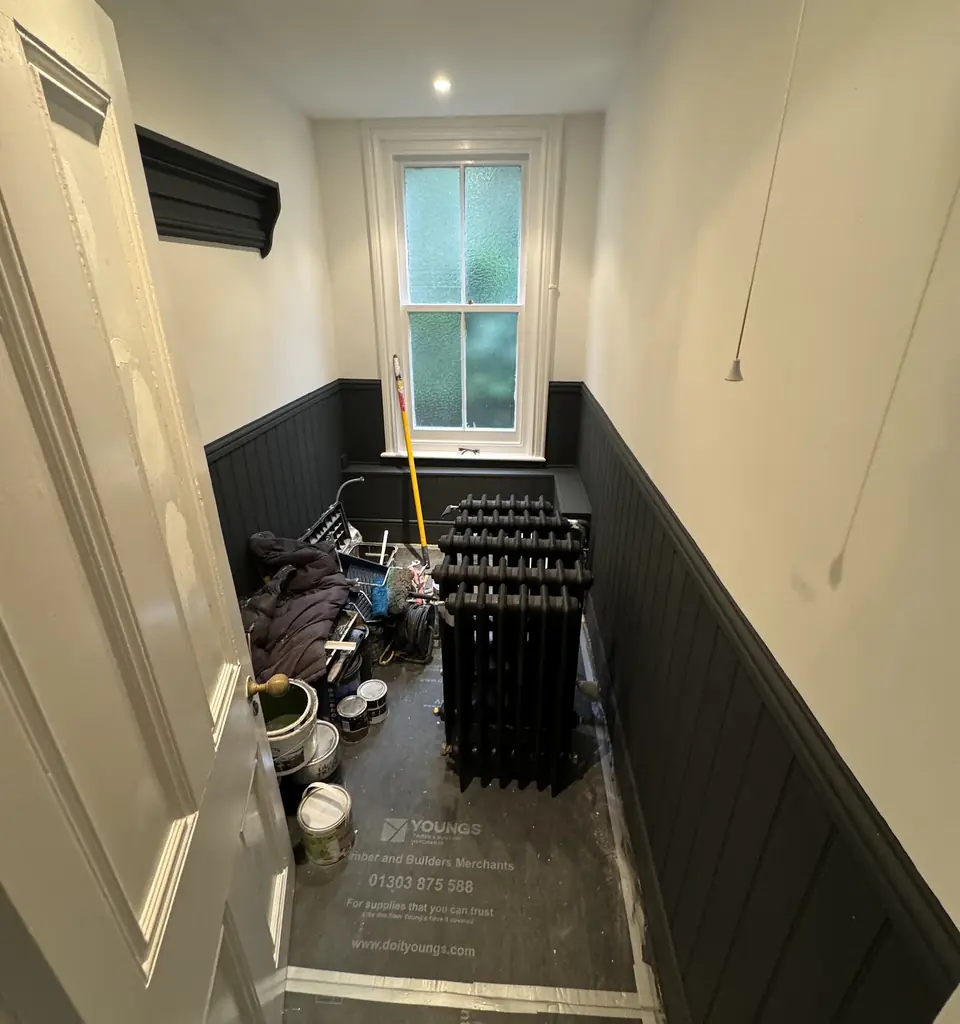
Building work is disruptive however well it is managed. These steps, done before work starts, reduce the mess and keep the job running to plan.
Clear the space
Move furniture, ornaments and anything fragile out of the working area and out of the route the team will use. Empty cupboards that will be taken out or are close to the work. The more space the team has, the quicker and tidier the job goes.
Dust and protection
Dust spreads further than you expect, so protecting the rest of the house is worth doing. Close doors, sheet off openings and cover furniture. Ask the builder how they will protect floors and carry out cleaning each day. A tidy team clears up at the end of each day, and that should be part of the agreement.
Access and parking
Think about where skips, deliveries and the team's vehicles will go, and tell the builder about parking restrictions, narrow roads and any permits needed. Make sure there is a clear route from the front to the work area.
Utilities and temporary arrangements
Ask which services will be switched off, and for how long: water, power or gas. If the kitchen is affected, plan a temporary kitchen with a kettle, microwave and somewhere to wash up. Know where the stopcock and the consumer unit are, in case of emergency.
Make decisions early
Late changes cost time and money. Choose the main fittings, such as the kitchen, bathroom, tiles, doors and windows, before the relevant work starts, and allow for lead times. See how an extension is built for the order in which decisions are needed.
Tell your neighbours
Let them know when work will start, what it involves and roughly how long it will last. A friendly conversation goes a long way. If the work is close to the boundary, remember the Party Wall Act may mean you have to give formal notice. Also tell the team about pets and children, so everyone knows where they can and cannot go.
A checklist for the week before
- Clear the work area and the route through the house.
- Protect floors and furniture you cannot move.
- Confirm parking, skip position and access with the builder.
- Set up the temporary kitchen, if you need one.
- Find the stopcock and the consumer unit.
- Confirm the final choices on fittings and finishes.
- Tell your neighbours.
During the build
Do I need to be at home?
Not all the time, but it helps to be available for decisions. Agree how and when you will communicate with the builder, and who has keys.
Do I need to move out?
Often not. Most extensions and many renovations can be done while you live there, with some disruption. Large internal works, such as an entire house renovation, may be different, and your builder will say so.
What if I change my mind?
Tell the builder as soon as you can, in writing, so the cost and effect on the programme can be agreed before the work is done.