
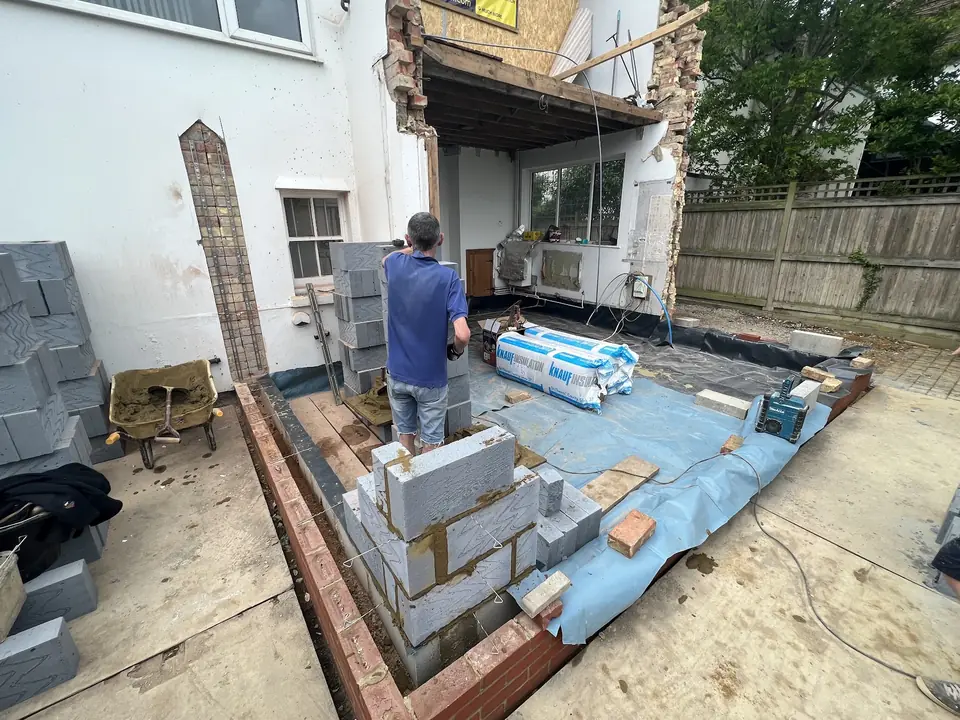
Homeowners often hear that something "does not need planning" and take that to mean no paperwork at all. It does not. Planning permission and building regulations are different systems, and getting one does not replace the other.
Planning permission
Planning is about whether you can build something. It covers what the building is used for, how big it is, how it looks and how it affects neighbours and the area. It is decided by your local council. Many smaller jobs are covered by permitted development, which gives you a national set of limits within which you do not need to apply. Our guide to extending without planning permission explains the main limits.
Building regulations
Building regulations are about how something is built: whether it is structurally sound, safe from fire, properly insulated, ventilated and drained. They apply even when planning permission is not needed, and permitted development does not exempt you from them. You apply to your council's building control team or to a registered building control approver, and the work is inspected as it goes. At the end you receive a completion certificate.
Which jobs need which
This is a guide, not a ruling, because it depends on your house and your plans.
- Garage conversion: often no planning permission, but almost always building regulations. See our guides to planning and building regulations.
- Single-storey extension: may be permitted development, so no planning application, but building regulations apply.
- Two-storey extension: more likely to need both. See single versus two-storey extensions.
- Knocking out a load-bearing wall: usually building regulations, with an engineer's calculations. See what is involved in a knock-through.
- Listed buildings and conservation areas: extra permissions can apply on top of both. See our guide to building work in a conservation area or listed building.
Why it matters
Work done without the right approvals can be a problem when you sell. A buyer's solicitor will ask for planning permission, or proof that none was needed, and for building regulations completion certificates. The council can also require unauthorised work to be changed or removed. It is far easier to check at the start than to put right later.
When Alistair visits to quote, he will talk through what is likely to apply to your project, and we can arrange drawings and building control as part of the job.
Common questions
Do I need building regulations if my project is permitted development?
Yes. Permitted development only answers the planning question. Building regulations are separate and still apply.
Who signs off building regulations?
Your council's building control team or a registered building control approver. Either way, you receive a completion certificate when the work passes its final inspection.
What if work has already been done without approval?
Councils can often issue a regularisation certificate for building work done without building regulations approval, though they may need to open up parts of the work to check it. For planning, a retrospective application may be possible. Ask the council before you try to sell.
Can I get confirmation that my project does not need planning permission?
Yes. You can apply to your council for a lawful development certificate, which confirms in writing that a proposed project is lawful. It is optional, but it can make selling easier later.
A sensible order of events
- Check whether the project is permitted development, and whether your home is listed or in a conservation area.
- Have drawings prepared, and apply for planning permission if it is needed.
- Submit the building regulations application, with an engineer's calculations if the structure changes.
- Serve any Party Wall Act notices.
- Start work only when the approvals you need are in place, and leave the work open for each inspection.